HENGIST PRESS
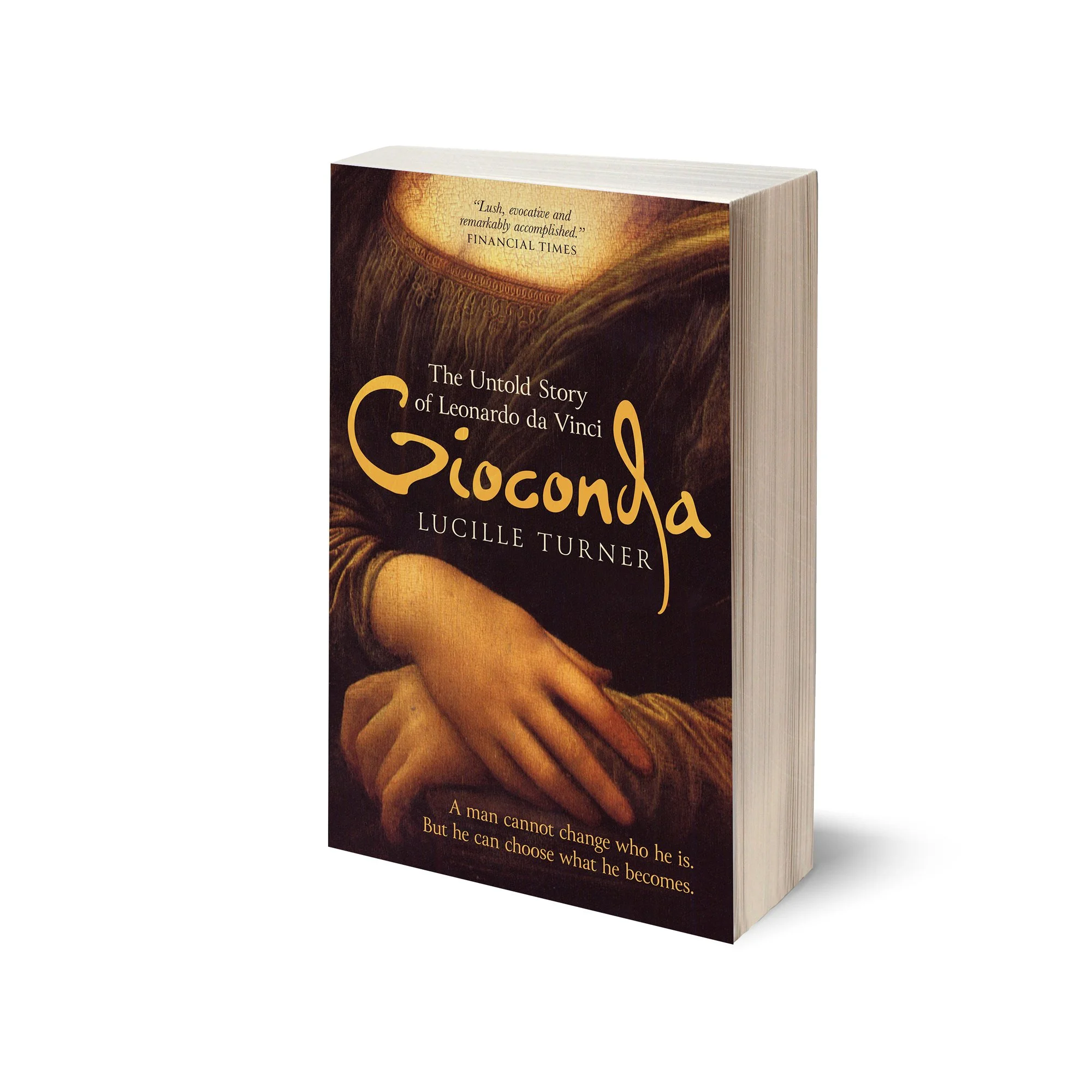
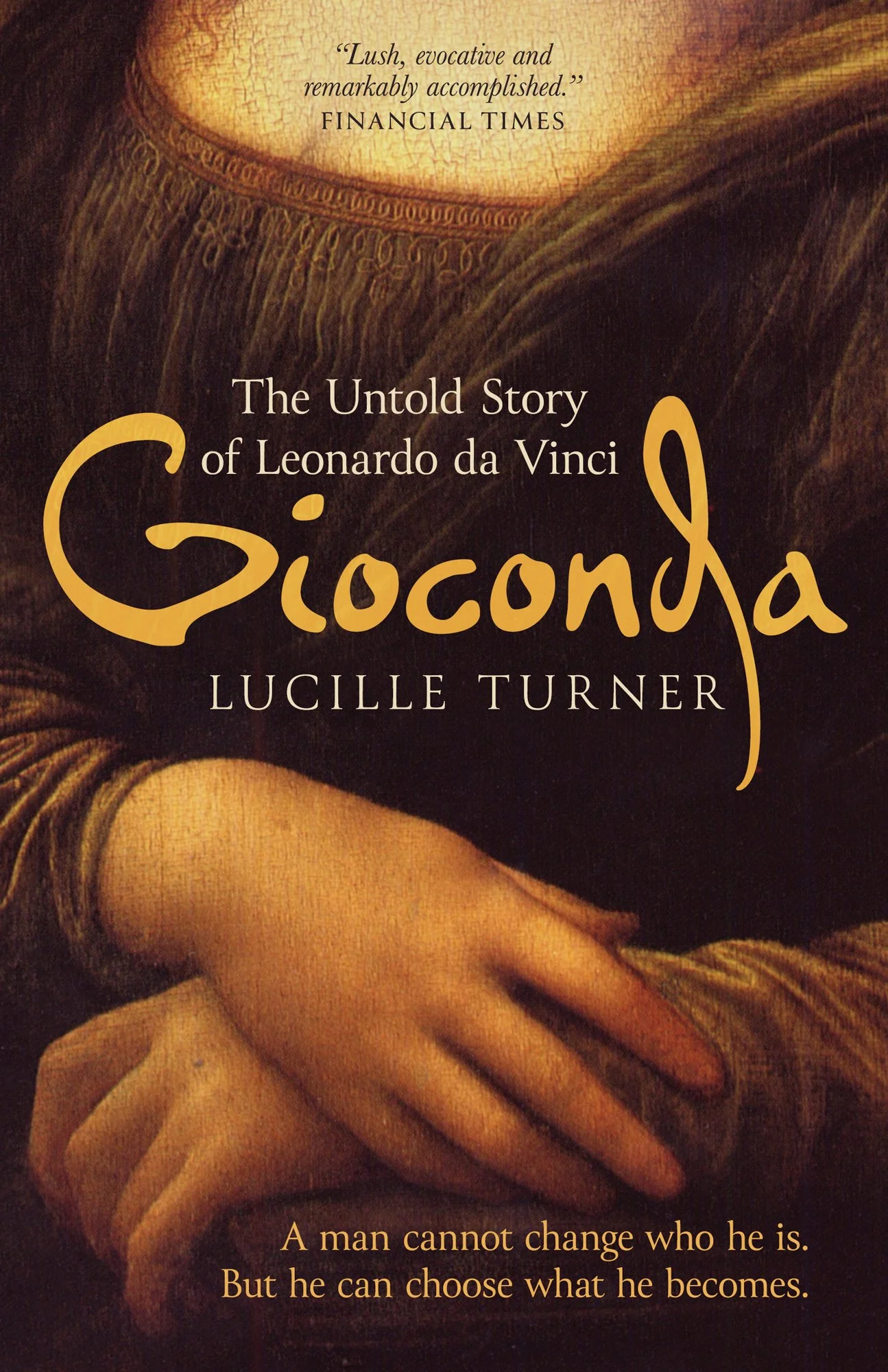
GIOCONDA
Reviews & Critical Acclaim
“It’s a dense book in the best way, giving the reader a life to inhabit rather than a plot to follow”
— The Historical Fiction Company, 2026
The Untold Story of Leonardo da Vinci
Lucille Turner
The revised edition of the award-winning historical novel.
Published 12 November 2026
THE HISTORICAL FICTION COMPANY — Read the latest review of GIOCONDA
Rated: 4.2 out of 5 stars
“The novel is less about the young girl who became the Mona Lisa than about the man who painted her. Leonardo da Vinci —portrait painter and inventor, a Renaissance man with startlingly modern ideas—soon took over the narrative. Nevertheless, I found it hard to dismiss the imaginative possibility that Lisa Gherardini, the woman behind the portrait, might somehow have been his friend.”
“Gioconda: A Novel of Leonardo da Vinci” by Lucille Turner writes the man who couldn’t let go of Mona Lisa- Leonardo da Vinci. That inability is the book’s whole premise. The book is a portrait of his mind as it moves from boyhood to adulthood, and through his habit of never finishing anything because finishing would mean letting go. In this book, the Mona Lisa is the one thing he keeps precisely because he never considers it finished. This novel imagines why that may have been the only way he could hold on, and what it cost him.
‘Sandro and Leonardo. Come here, closer.’ ‘I am giving you both the opportunity to make a contribution.’... Now Andrea is speaking to him... ‘Is that what you want to paint, Leonardo? A wilderness?’ He warms up. ‘Yes, and then there’s the figure of Jesus, and the water at his feet. And then of course there is the idea of baptism.’ Andrea looks startled. ‘The idea of baptism?’... More eyes on his back. ‘What do you suggest? That we paint him as a sinner?’ ‘I thought, Maestro, that perhaps we could paint him as a man?’ ‘Sinners like the rest of us . . . You are asking too much, Leonardo.’
In this passage, Leonardo’s way of seeing collides with institutional limits and a mentor who both indulges and warns him. Leonardo is asking too much. The reader who saw him in a previous scene punished for looking closely now sees the same instinct. But this time, the instinct is met with a question rather than a beating. The reader who knows the Vasari legend sees the moment arriving. Even so, they fear that the tolerance in the room might be temporary, and that the world outside it will eventually answer him the way his father once did.
“‘Your letter of introduction reached me just this day. You are hot on its heels, Leonardo from Florence. Tell me, what are you running from?’ ‘That is a good question, Messer,’ he replies.
‘How indeed can it be possible to judge, once a man is mobile, whether he runs towards one object or away from another?’ His host throws back his head and laughs.”
Here, Leonardo has evolved into a man who uses explanations as a shield. He gives abstract answers in what feels like self-protection. The reader realizes that he- a man who has spent his life trying to understand how seeing works, dissecting eyes and chasing rainbows- can never quite bear to be seen. His language is one he ensures he can survive on. That refusal to be seen is an interesting one, and the book carries to its last page in an endeavor to show how the refusal became his signature.
While this book moves through four places- Anchiano, Florence, Milan, San Casciano- as well as several decades, it helps the reader stay oriented by providing each section with clear geographic and biographical context. In this way, the reader knows where the main character is and what stage of life he is in even as the plot advances. Moreover, the numbered parts and short scenes further reinforce this clarity and make the structure easy to follow. Its cast is managed according to function which is an intelligent choice for a novel of this scope. At the center of the narrative is a single act: Leonardo stealing his own painting, and it provides a clear frame through which the story unfolds. With this frame, the book avoids over-explaining. It further incorporates sensory clues such as the smell of a workshop, the heat of a fever and the sound of a crowd, helping the reader navigate its constantly changing settings and events.
“Gioconda: A Novel of Leonardo da Vinci” asks you to stop what you are doing and engage with it, and in so doing, engage with a great mind that left many baffled by its methods and contradictions. It’s a dense book in the best way, giving the reader a life to inhabit rather than a plot to follow, trusting them to find their footing in it.
Further recognition of GIOCONDA
“A lush, evocative and remarkably accomplished debut novel.”
THE FINANCIAL TIMES
“Renaissance man Leonardo da Vinci’s astonishing genius is brought to life in this vividly atmospheric novel.”
EASY LIVING
“An elegant, historical debut novel... cleverly constructed and imagined... Turner’s careful research and graceful prose style make GIOCONDA a pleasure to read.”
METRO
“Lucille offers a fresh and intimate perspective on da Vinci’s life.”
BOURNEMOUTH ECHO